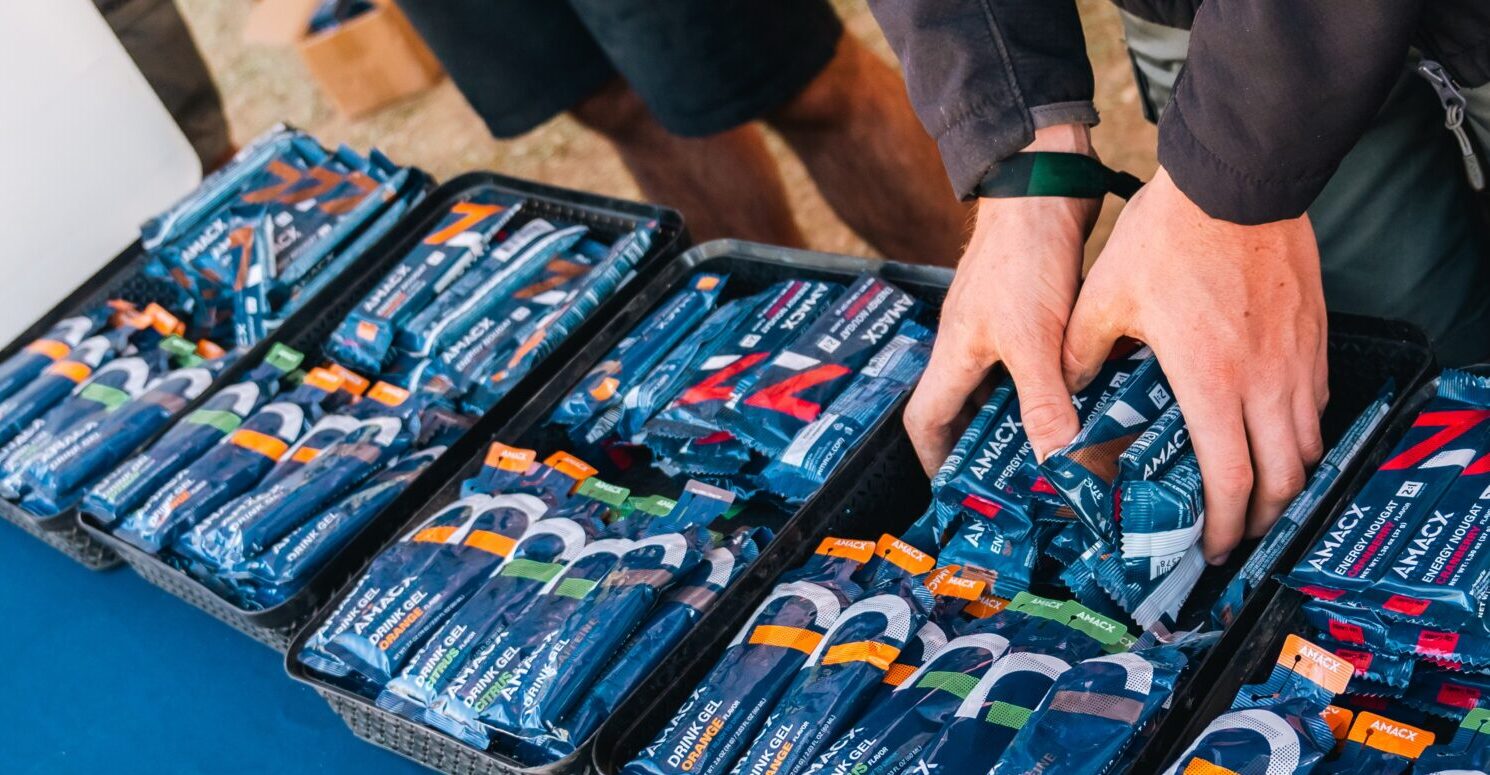
The culture of the Otter TERREX Trail, presented by EasyEquities, does not appear from nowhere. It is built, slowly, by the people who keep showing up. The crew who have not missed a year. The safety team stationed at river crossings with broad smiles and broader arms. The athletes who learn the hard way that this course rewards those who respect it enough to return. All of them carry their Otter stories, and all of them add to the texture of what this race has become.
After claiming his third consecutive Otter TERREX Trail victory last year, Scottish trail runner Robbie Simpson was asked what keeps bringing him back. “There’s something very special about the South African trail running community,” he said. A statement that rings true for the Otter community.
That community is made up of individuals, each with their own story of what this event means to them. We wanted to tell some of those stories. So, we sat down with three athletes who have each walked a different path to the start line and asked what keeps bringing them back. The answer is both simple and complex: it’s a feeling.
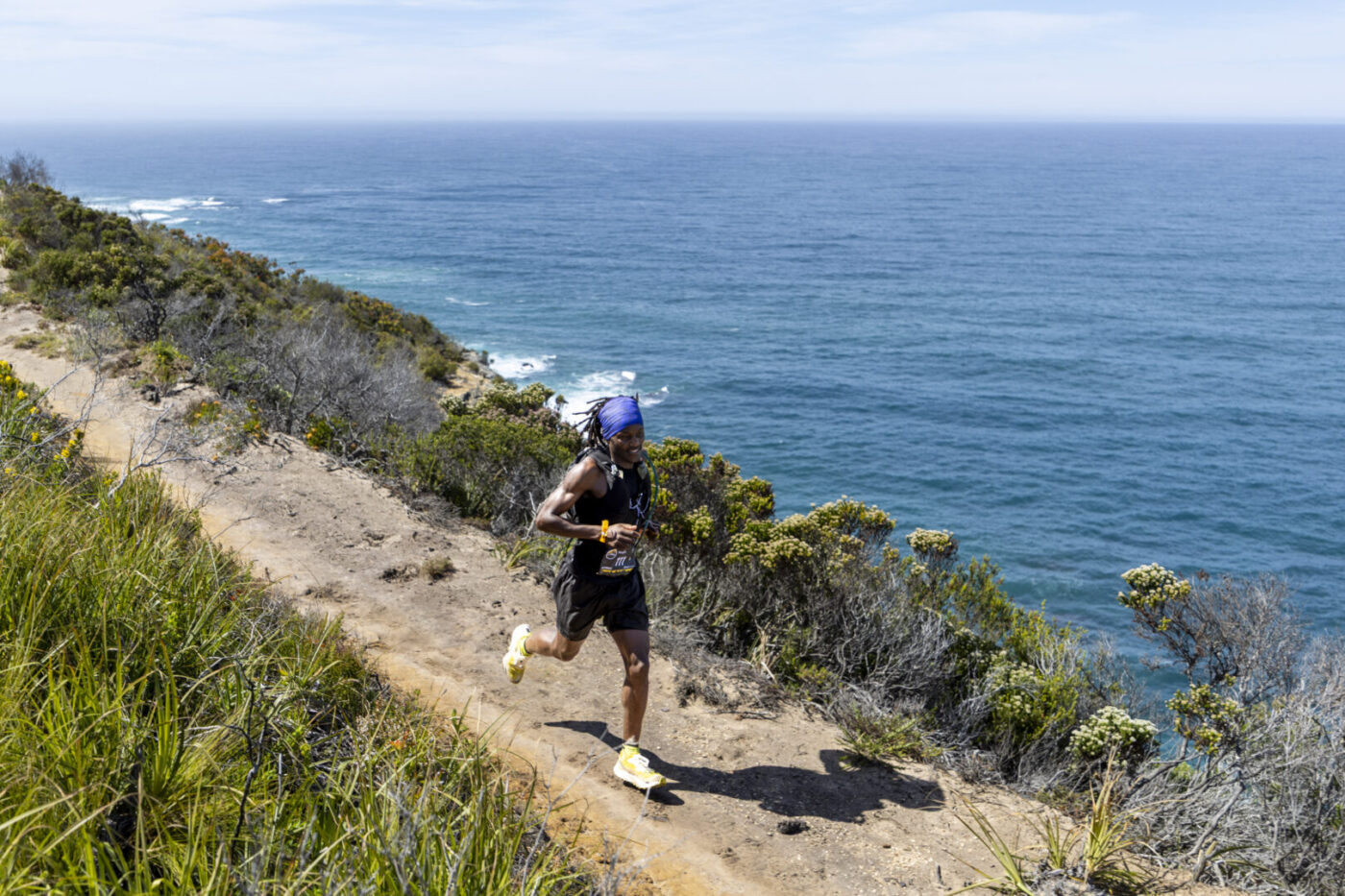
Mvuyisi Gcogco
Mvuyisi has run ten Otters since 2016. For most of those years, he was fitting training runs between long-haul truck driving shifts, parking the truck in a fuel queue and heading out for a run, asking a fellow driver to move the vehicle forward while he was gone. Sleep came in four-hour windows. The training kilometers he did log, were predominantly on flat Port Elizabeth roads, because that was what was available. No mountains. No technical terrain. No climbs.
And yet, consistently, he would arrive at the Otter and land in the top ten. The first half of the race always took time as the technical trail demands something you cannot replicate on tarmac, but once the rhythm clicked, he was racing. In 2019 he finished fourth. He has been chasing the top step ever since.
“It’s not the fastest runner who wins the Otter,” he says. “It’s the one who can take the most risks.”
Two months ago, Mvuyisi relocated to Cape Town. For the first time in his Otter career, trails are on his doorstep. The climbs, the technical terrain, the split-second decisions he once had to figure out on the fly;he can now prepare for properly. What that does to a man who has been finishing in the top ten without them is an interesting question.
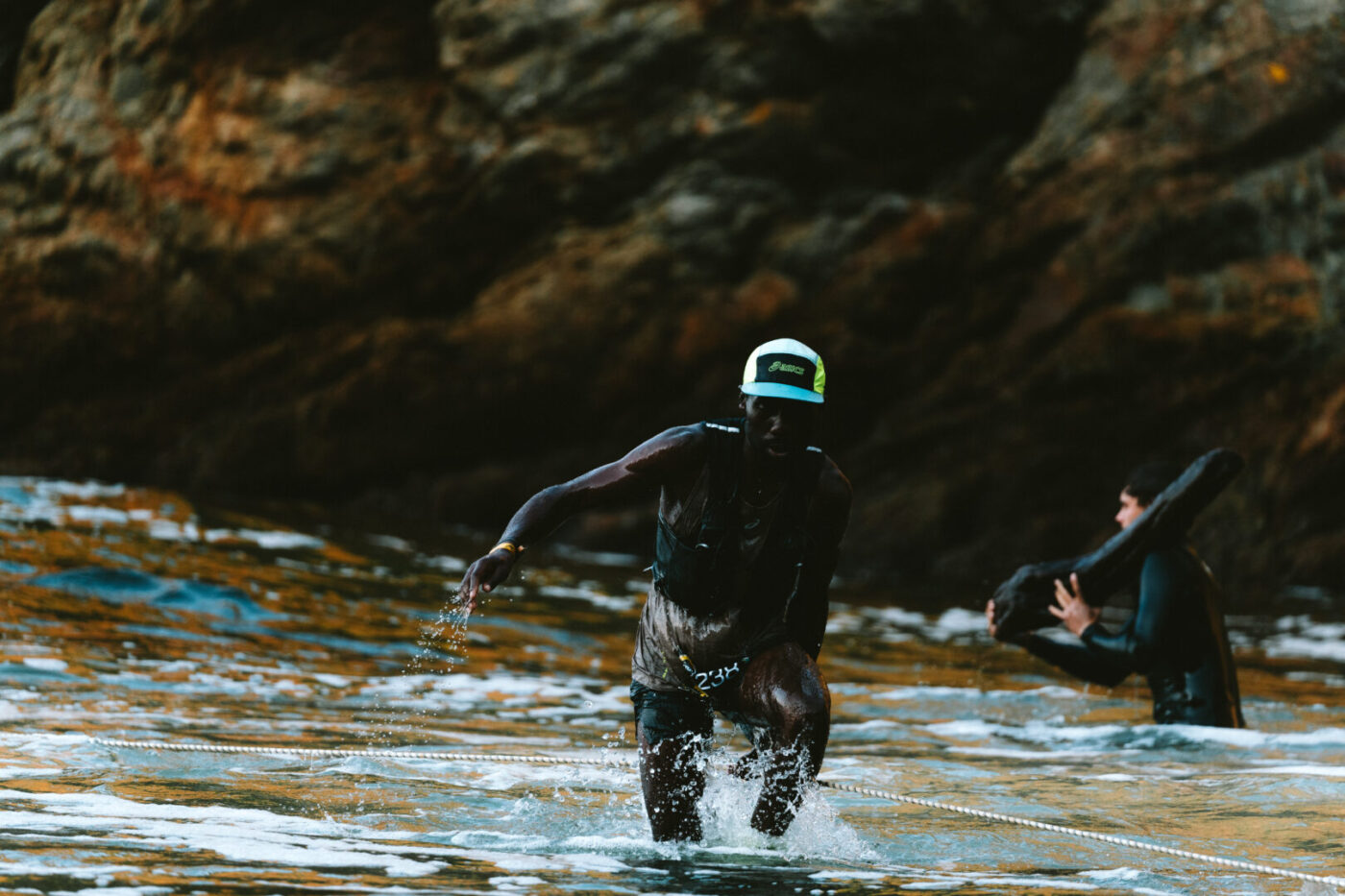
Admire Muzopambwa
Admire ran his first Otter in 2023, arriving at a course that is technical and unforgiving, against a field of athletes who had been studying this trail for years. He had not. Yet he placed 12th on debut.
He came back in 2024 and finished 5th. The course, which had taken time to read on debut, was starting to make sense. He says that this is exactly how it is supposed to work. “You have to go back there again to have experience. It’s how you can progress into good positions, the good times.” On a course that punishes the unfamiliar and rewards those who learn its rhythms, that logic showed up at once in his results. In 2025, he finished 7th. Proof, if any were needed, that this race does not hand out easy returns. Each year is its own negotiation.
There is one section where that experience counts for something different entirely. Admire cannot swim. Every year, the Bloukrans river crossing looms differently for Admire than it does for most. But every year, he gets through it and once he does, something shifts.
“Coming out of Bloukrans is a big relief,” he says. “As soon as I get out, my legs can give me more power to come up. That would be an advantage to me.” The relief becomes fuel. It is the kind of mental reset that only makes sense to someone who has faced the same crossing before and knows what waits on the other side.
What keeps bringing him back is not complicated. “When I’m on the trail, I feel free,” he says. “No restrictions. Just freedom.” On a course carved through one of the most protected stretches of coastline in the country, that feeling is hard to argue with.
His goal is the top step of the podium. “One day,” he says, then pauses. “Probably soon.”
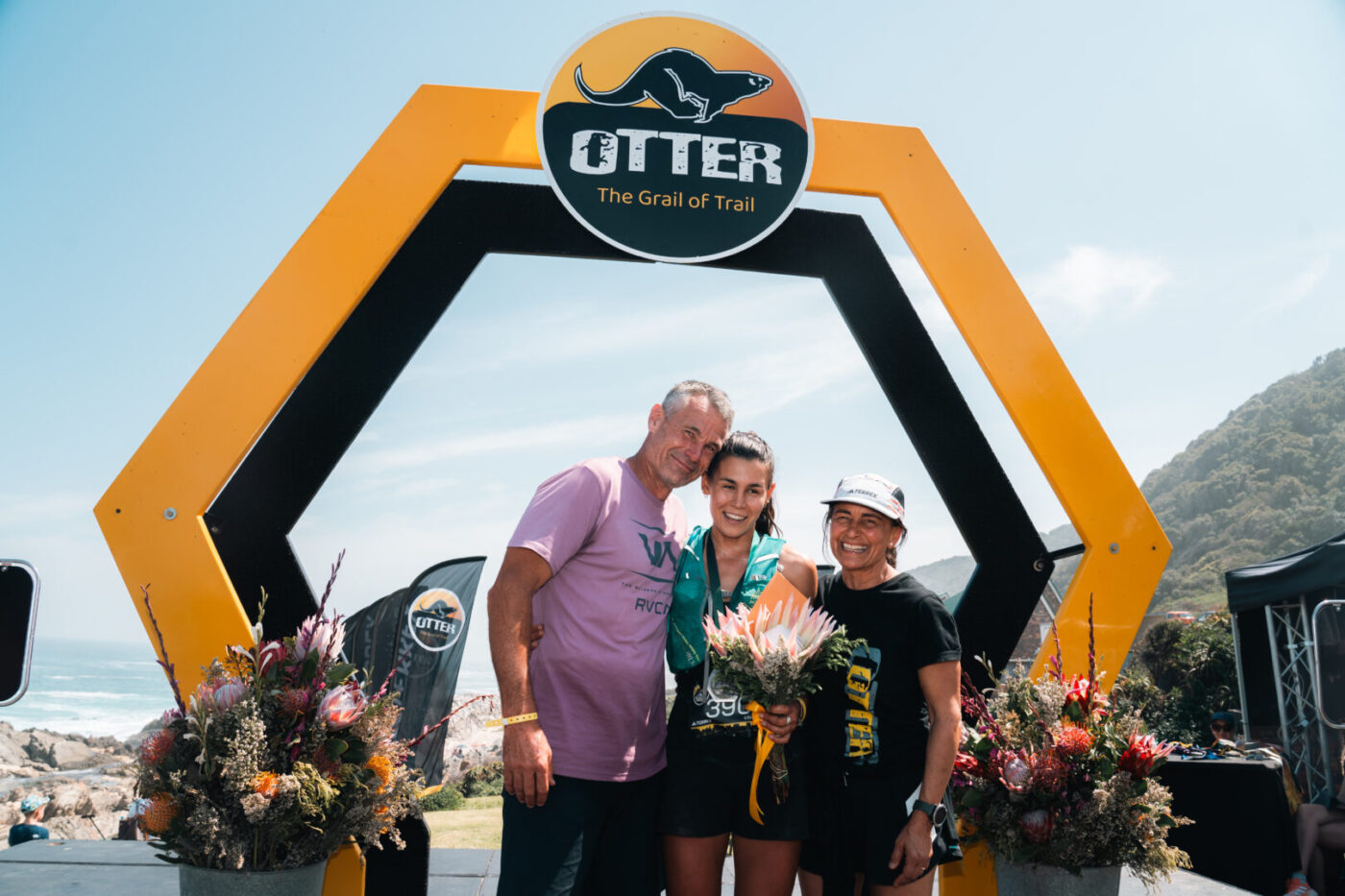
Carla Collins
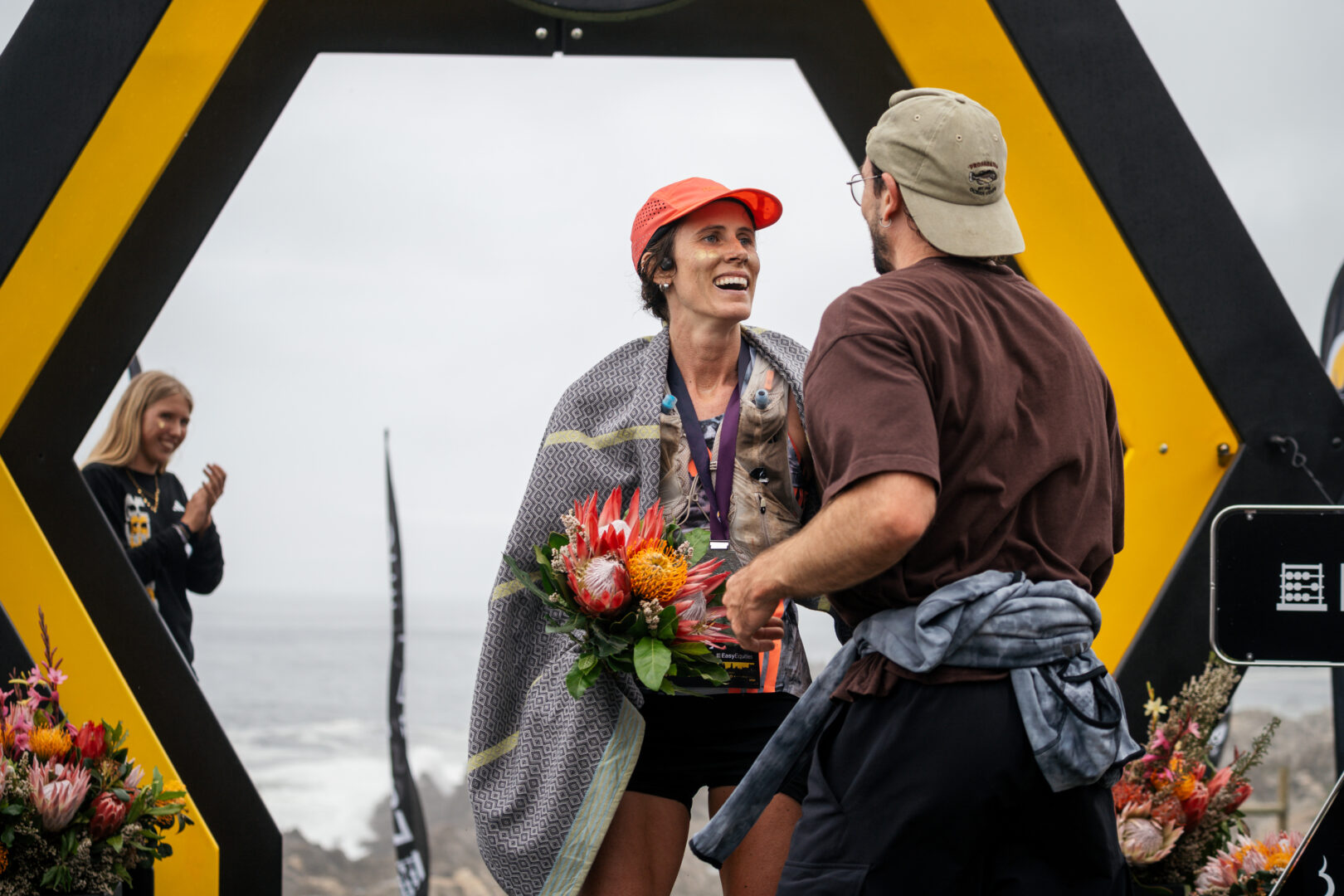
Carla Collins grew up at the Otter. Literally. She was seven years old when the first race took place, and she spent the next fourteen years cheering from the sidelines, handing out finisher medals, helping with registration behind the scenes. She watched Marc Lauenstein break the four-hour mark. She watched Toni McCann podium at the Golden Trail Series final. She watched Kane Reilly run his very first Otter. In 2024, she finally ran her own, finishing 10th in the women’s field on the same day Bianca Tarboton claimed the top step once more.
Growing up at the Otter, and in a family for whom the outdoors was simply part of life, gave her a particular perspective on what this event represents. Conservation, she says, is too often understood as exclusion, fencing the space off, keeping people out, protecting it from human contact. But that model has a flaw. If people never experience a place, they have no reason to fight for it. Every runner who moves through the Otter leaves with a connection to the coastline. And people protect what they love.
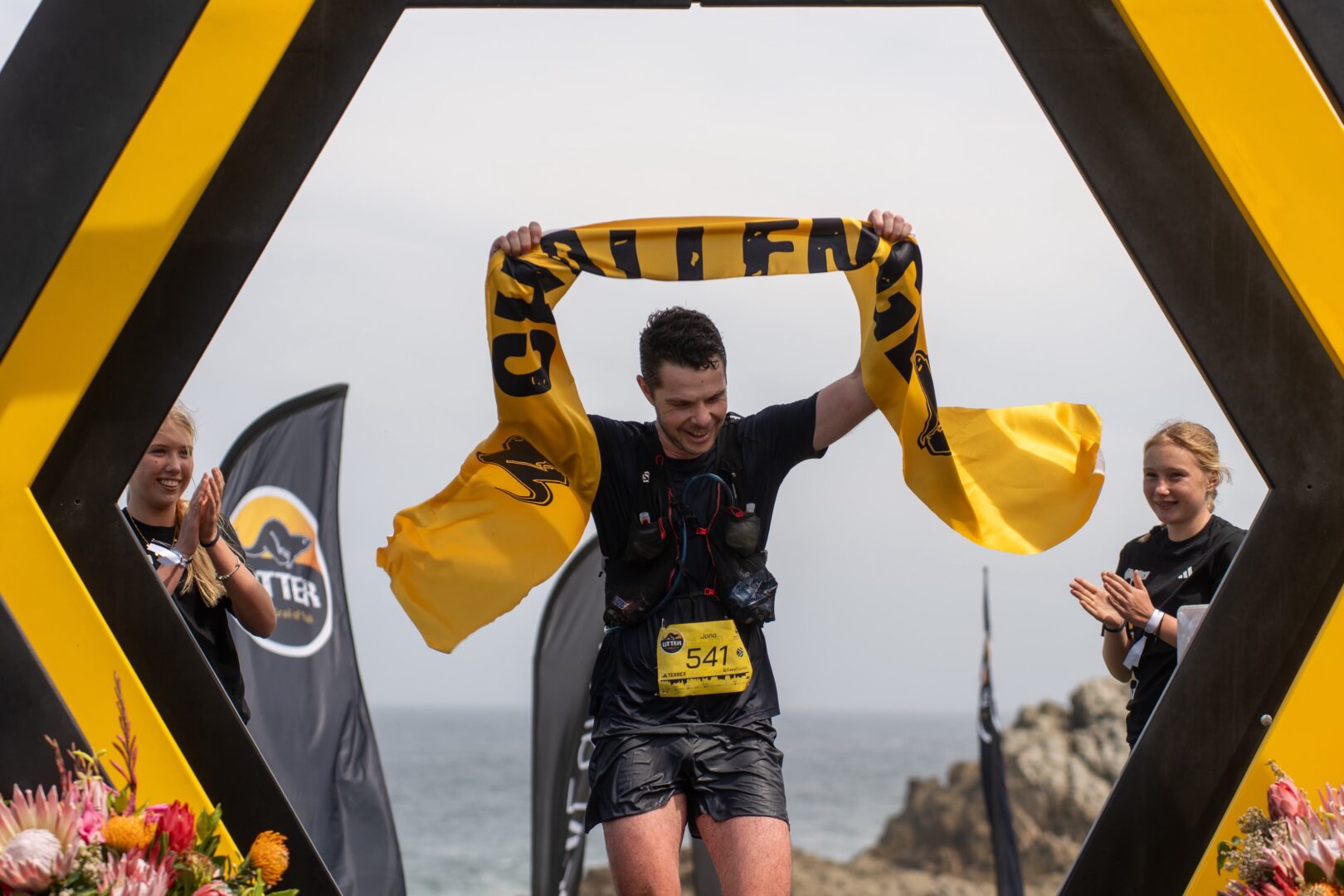
When she finally crossed the finish line in 2024, she saw the hexagonal arch from the other side for the first time in her life. Sixteen years of Otter, and now she was one of them. Ready to fight for this coastline’s protection more than ever before.
What ties these three together is not pace or podium position. It is the fact that the Otter found a place in their hearts and never left. But do not mistake love for the race as acceptance of where they currently sit in it. All three have unfinished business on this trail.